Springer Spaniel Grooming: Feathering and Practical Tidies
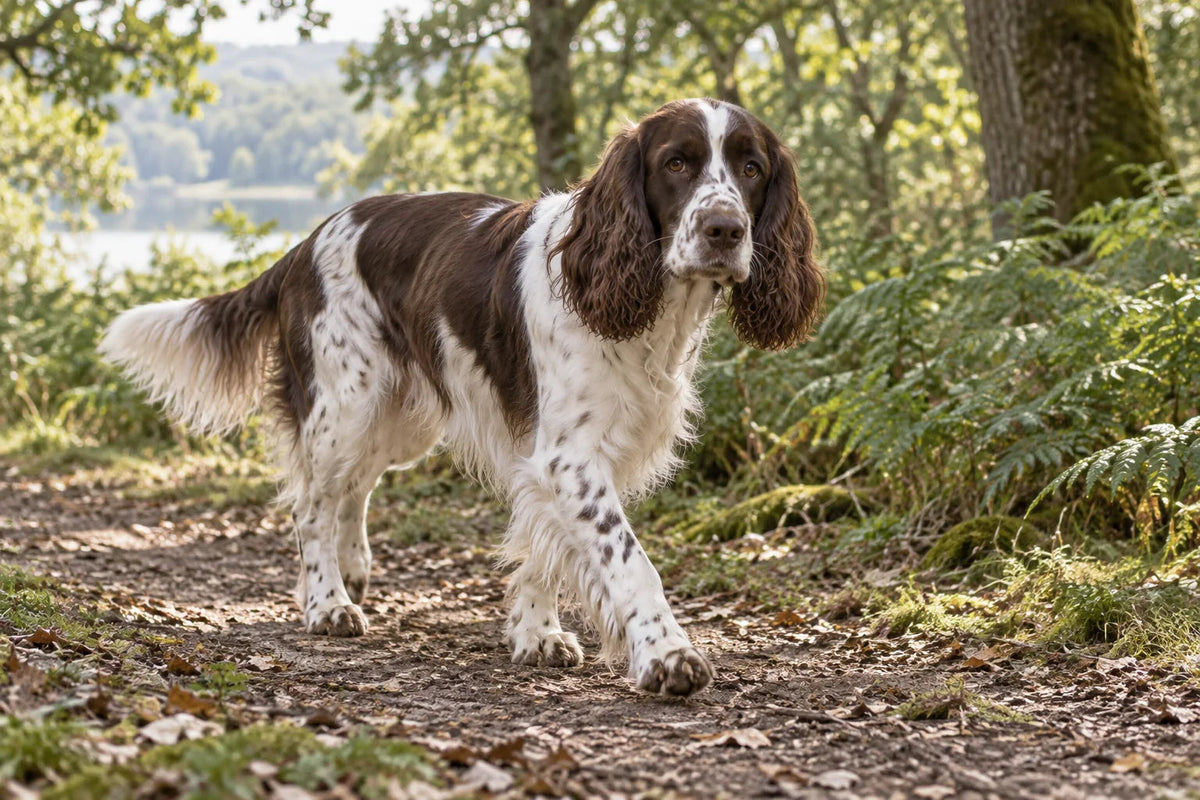
An English Springer Spaniel's grooming routine has to make sense after a real walk. Long ear fringes, chest feathering and hair around the legs can collect dirt while the body still looks clean. Maintaining those areas well often makes more difference than taking the whole coat short.
A practical tidy can be useful, but agree what it is meant to solve. Preserve the natural body coat where possible and focus on comfortable feathering, clean feet and a routine you can sustain.
Manage the feathering without losing the whole coat. Regular checks and a sensible tidy are different from routinely shaving the body for shedding or summer.
Two layers, plus longer furnishings
The English Springer Foundation's coat description distinguishes the outer coat from a soft undercoat and identifies feathering on the ears, chest, legs and belly. It describes a functional natural appearance rather than an excessively sculpted one.
The AKC breed profile supports weekly brushing and practical trimming around particular areas. Individual coats vary considerably in density and feathering, so your groomer should assess the dog rather than copy a generic spaniel photograph.
A pet does not need show preparation. The useful question is which length and tidy make ordinary maintenance comfortable without unnecessarily removing the body coat.
Start with the ears before they become a big job
Check behind each ear and through the long fringe. Hold the ear gently and work in small sections, supporting the hair rather than tugging the skin. Start at loose ends and progress towards the roots only where the hair is free.
A VUNRO coarse-and-fine comb can check smaller ear sections after brushing. Begin with wider teeth. If the comb catches, separate the hair to identify the snag instead of dragging it through.
After meals, drinking or a wet walk, remove ordinary surface dirt and dry the fringe. Do not push tools into the ear canal or use an improvised cleaner. Pain, persistent odour or discharge needs veterinary advice.
Use a post-walk route around the body
- Check feet and between the toes.
- Look at the lower leg feathering and inside the hind legs.
- Part the chest and belly hair.
- Check under the harness and behind the ears.
- Look through the tail feathering if your dog has it.
- Remove loose debris gently, then locally clean and dry where needed.
Do not pull an embedded burr or cut beneath a tight knot. Skin can be hidden inside matted hair. Get a groomer to assess anything you cannot separate comfortably.
This quick routine helps you distinguish a dog that needs a full bath from one with a few muddy collection points. It also tells you which areas need more attention at the next brushing session.
Brush and then check with a comb
Use a suitable brush with light pressure, parting longer areas so the roots are not missed. Give the armpits and the back of the thighs their own attention. Avoid repeatedly brushing the top of a tangle while leaving its base tight.
The VUNRO combination comb can check larger sections of clear feathering. Finer teeth should follow only where wider teeth pass freely.
Keep sessions manageable. If you regularly find tight knots despite your effort, ask your groomer to demonstrate sectioning and discuss a less demanding length in those areas.
Give the groomer a useful brief
Explain where dirt collects, which sections tangle and how much home brushing you can realistically do. Ask what they propose for feet, ear fringes, neck and sanitary areas, and what will remain natural.
Specific tidying can make a working household routine easier. A short all-over clip is a separate decision with a different effect on the coat's appearance. Do not use routine shaving as the first answer to shedding.
If there are painful mats, comfort takes priority and the groomer may need a local welfare solution. Agree on a maintenance plan afterwards so the same areas do not become difficult again.
Finish the wash beneath the surface
Check tangles before bathing. Use comfortable water, dog shampoo as directed and a non-slip setup. Rinse the chest, underside and furnishings thoroughly, keeping direct spray away from the head.
Press dry with towels rather than rubbing long hair into knots. If using a dog dryer, keep airflow comfortable and moving, away from ears and face, and supervise throughout. Check behind the ears and through dense feathering at the roots before finishing.
Blue Cross bathing guidance supports an individual schedule based on coat and activity.
Remember nails beneath the feathering
Inspect nails regularly, including dewclaws, and ask for a demonstration of the safe trimming margin. The VUNRO nail grinder can smooth small amounts gradually if the dog tolerates it. Keep long hair clear, use brief contact and stay away from the quick.
A successful Springer groom leaves the dog clean, dry and comfortable, with feathering you can maintain and a natural coat suited to ordinary life.
Keep learning
More from the Blade Blog
Whippet Grooming: Gentle Coat Care and Comfortable Nails
Read the guide →
Chihuahua Grooming: Smooth Coats, Long Coats and Tiny Paws
Read the guide →